When choosing heating solutions for winters in southern China, most people face three core questions:
Will the electricity bill be excessively high? How long does it take to warm up a room after arriving home? Will it lose heating power after a couple of years, consuming more electricity while delivering less warmth?
The market offers a wide range of options — air conditioners, electric heaters, underfloor heating and graphene heating systems. Every brand claims superiority, but few dare to lay out full parameters and calculate actual costs transparently.
Today, we skip marketing concepts and fancy rhetoric, and focus on hardcore data: electrothermal radiation conversion efficiency ≥98%, 30,000-hour service life test. We will break down the principles, clarify costs, and compare differences.
After reading, you will know whether graphene heating is truly worthwhile.
Part 01 Electrothermal Conversion Efficiency ≥98%
Nearly Every Kilowatt-Hour Is Converted Into Usable Heat
Let's start with the most practical question: for every kilowatt-hour of electricity your heating device consumes, how much actually turns into warmth you can feel?
Many people assume "all electric heating is power-hungry". In reality, energy efficiency varies drastically across heating technologies. A difference of just a few percentage points adds up to thousands of yuan in electricity bills over the years.
We have compared the most common heating methods for households in southern China:
✅ Air Conditioner (Heat Pump Mode)
- Under ideal conditions, the Coefficient of Performance (COP) is around 3, but this measures heat transfer efficiency. When outdoor temperatures drop below 0℃ during humid cold winters in southern China, air conditioners require frequent defrosting and activate auxiliary electric heating — essentially resistance heating. Efficiency drops directly to around 1.0, doubling electricity costs. Additionally, hot air rises, creating a "hot top, cold bottom" effect, making perceived temperature much lower than the displayed temperature and further reducing actual heating efficiency.
✅ Gas-Fired Water Underfloor Heating
- Wall-hung boilers have a combustion efficiency of about 85%–90%. However, heat must travel through water pipes, conduct through the floor, and then radiate into the air. After multiple layers of loss, the effective heat utilization rate is only 60%–85%.
✅ Resistance Wire / Carbon Crystal Heating Film
- Pure resistance heating with an initial electrothermal conversion rate of about 90%. Its biggest drawback is rapid attenuation — heating performance declines after 2–3 years of use. You pay the same electricity bill but get less warmth every year.
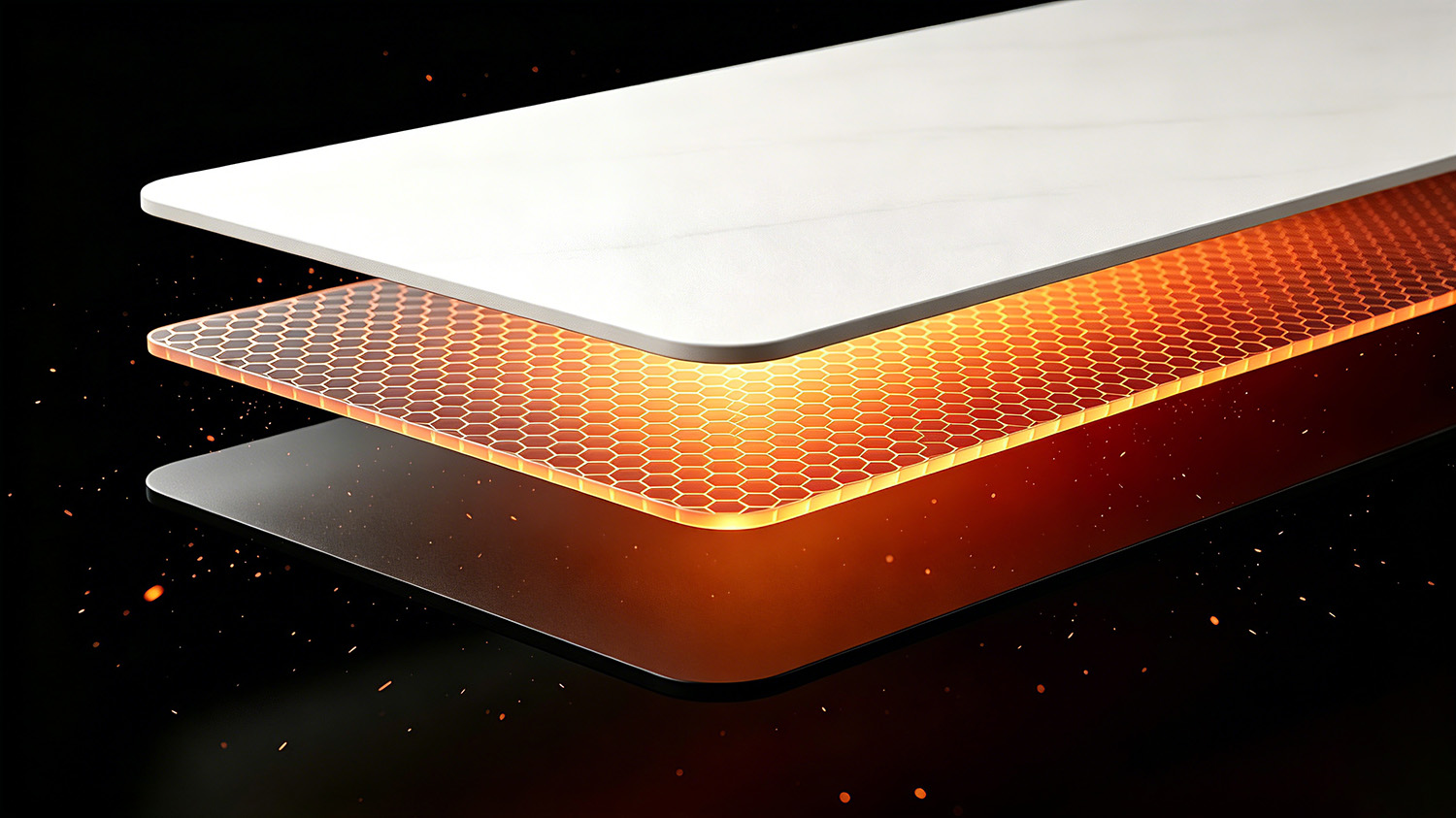
✅ Yuanxi Technology Graphene Intelligent Heating Stone Slab
- The effective electrothermal conversion rate stably reaches ≥98%, with almost all electrical energy converted into thermal energy and nearly no additional loss.
Part 02 Passed 30,000-Hour Service Life Test
(Power Attenuation of Only 1%)
Many people only look at initial installation costs when choosing heating, but overlook a hidden pitfall: power attenuation.
Many electric heating products work well in the first year, lose heating power in the second year, and become significantly insufficient by the third year — while the electricity bill remains unchanged. Eventually, you must remove and replace them, resulting in higher long-term costs.
We have compared the service life and attenuation of several heating methods:
- Air Conditioner: Total service life of 8–10 years. The compressor ages year by year, heating performance declines annually, and refrigerant and filters require regular maintenance.
- Gas Wall-Hung Boiler: Service life of 7–8 years. The entire unit requires replacement upon expiration, and professional cleaning and maintenance are needed every year.
- Resistance Wire / Carbon Crystal Heating Film: Obvious power attenuation occurs after 2–5 years. Some products even fail completely and are largely unrepairable, requiring full replacement.
- Yuanxi Graphene Intelligent Heating Stone Slab: Passed the 30,000-hour service life test by authoritative institutions. After 30,000 hours of operation, power attenuation is only 1% (negligible).
How long exactly is 30,000 hours of use?
Calculated based on 6 hours of daily use and 3 months of heating per year for households in southern China, annual usage totals about 540 hours.
30,000 ÷ 540 ≈ 55 years
Even with the full-day heating intensity typical in northern China, it can operate stably for more than 25 years.
Part 03 Why Is Attenuation So Low?
It Boils Down to Material Differences
Heating films use organic polymer substrates, which gradually oxidize, embrittle and decompose under long-term high temperatures. Their performance naturally deteriorates year by year, much like a plastic stool that loosens and cracks after years of use.
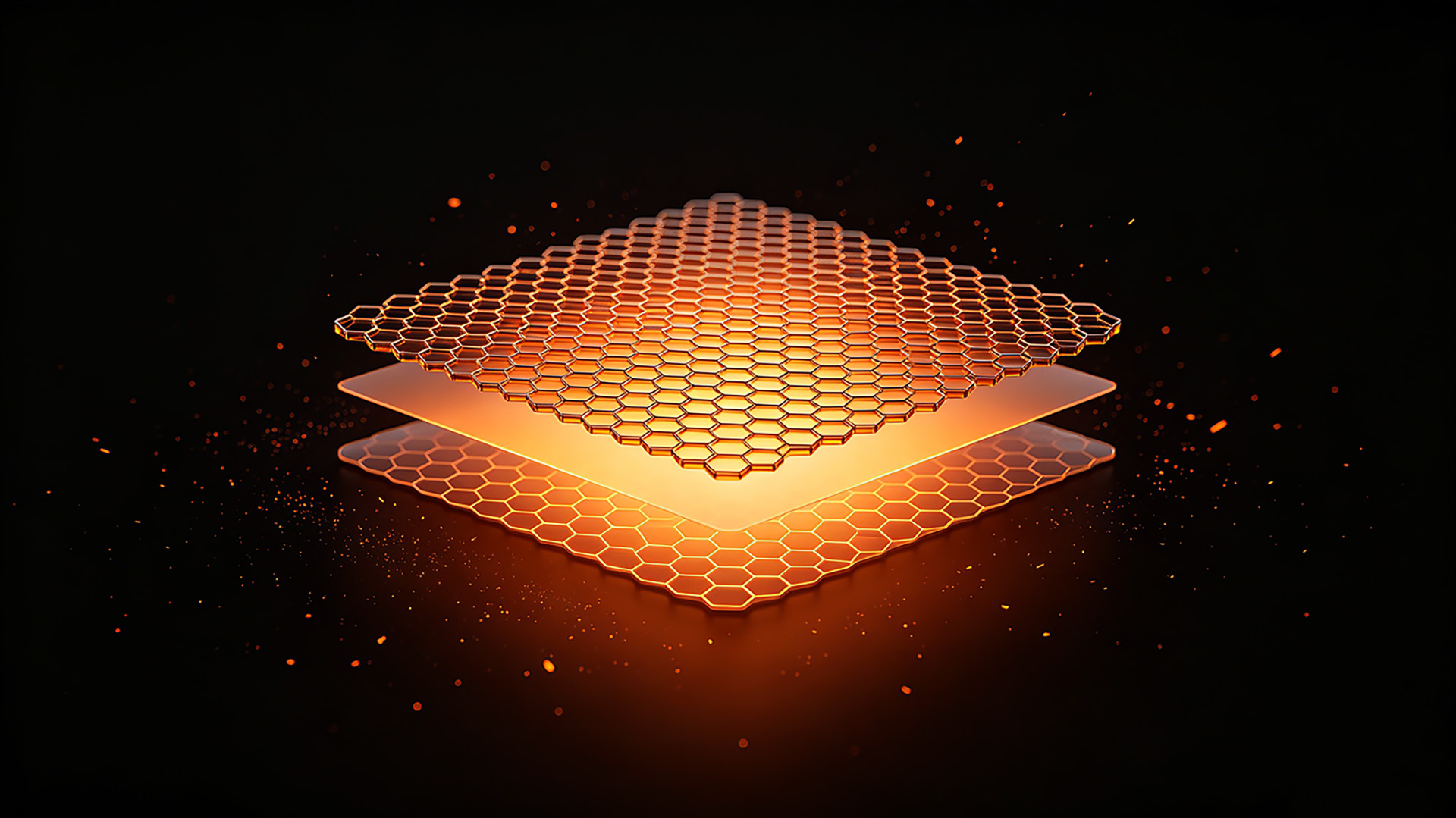
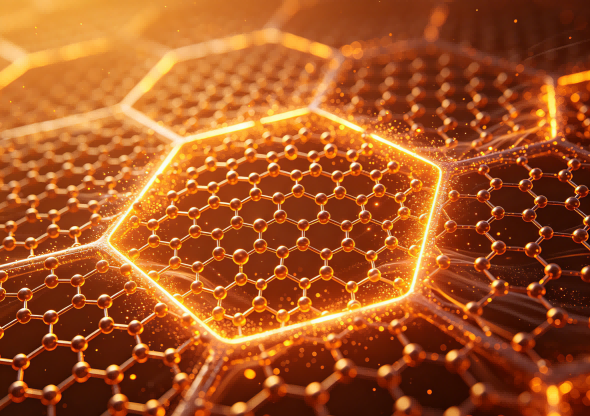
Graphene, by contrast, is an inorganic carbon material with an extremely stable hexagonal honeycomb carbon atom structure. It resists high temperatures, does not oxidize, and does not age — equivalent to granite in the heating industry, remaining unchanged for decades.
Coupled with electronic-grade composite encapsulation, IPX7 waterproof rating and Class A1/B1 fire resistance, the heating layer is protected by multiple layers inside and out. Humid "back-to-south" days in southern China and high moisture in bathrooms will not affect its service life at all.
Part 04 One Table to Understand:
How to Choose Among 4 Mainstream Heating Methods?
We have organized the core dimensions into a comparison table for intuitive reference:
| Comparison Dimension | Air Conditioner (Heat Pump Mode) | Gas-Fired Water Underfloor Heating | Resistance Wire / Carbon Crystal Heating Film | Yuanxi Graphene Intelligent Heating Stone Slab |
|---|---|---|---|---|
| Effective Thermal Efficiency | COP ≈ 3 under ideal conditions; drops to around 1.0 in low temperatures due to frequent defrosting and auxiliary electric heating | Boiler combustion efficiency 85%–90%; effective heat utilization 60%–85% after pipeline and floor conduction losses | Pure resistance heating, initial electrothermal conversion rate ~90% | Stable effective electrothermal conversion rate ≥98%, nearly zero conduction loss |
| Service Life & Attenuation | 8–10 years total service life; compressor ages annually, heating performance declines gradually | years service life for boiler; full unit replacement required upon expiration | Obvious power attenuation in 2–5 years; some products fail completely and are largely unrepairable | Passed 30,000-hour authoritative life test; power attenuation only 1%, stable service life up to decades |
| Heating Experience | Hot air rises, creating a top-hot / bottom-cold effect; perceived temperature is lower than displayed | Slow temperature rise; heat radiates from bottom to top, relatively uniform overall | Linear/point heating with large temperature difference and heating blind spots | Full-area planar uniform heating; panel temperature difference within ±5℃; gentle far-infrared sensation, wind-free and silent |
| Maintenance Requirement | Regular refrigerant replacement and filter cleaning | Annual professional cleaning and maintenance; high replacement cost upon expiration | Largely unrepairable; full replacement required after performance attenuation | Maintenance-free; IPX7 waterproof, Class A1/B1 fireproof, multi-layer protection for stability and durability |
| Long-Term Cost Performance | Electricity bill doubles in cold weather; high long-term cost with maintenance expenses | High overall cost from gas fee + annual maintenance + end-of-life replacement | Rising electricity bills due to annual attenuation; high hidden cost from frequent replacement | High efficiency and low energy consumption; nearly zero power attenuation; no extra maintenance cost; outstanding long-term cost performance |
The Advantages of Graphene Heating
Root in Solid Materials Science
Planar heating is faster than linear heating; inorganic materials are more durable than organic materials; far-infrared radiation is more comfortable than convection heating.
In the end, the advantage of graphene heating is never some "mysterious black technology" — it is solid, proven materials science.
As a leading formulator of IEC international standards for graphene, a national high-tech enterprise, and a "Specialized, Refined, Differential and Innovative" enterprise, every performance claim of Yuanxi Technology is backed by authoritative test reports: national 3C certification, EU CE certification, international CB certification, IPX7 waterproof rating, Class A1/B1 fire resistance, etc. All parameters are verifiable and traceable.
From setting industry standards to delivering solutions to thousands of households, we always believe: good heating should speak with data and demonstrate its quality visibly.
If you are planning a heating solution, feel free to leave a comment with City + Area, and we will provide free energy consumption calculation and a customized heating plan for you.
Guangdong Yuanxi New Material Technology Co., Ltd.
Mobile: +86 188 2517 7897
Email: zhangmengni@yesusee.com
Address: 9th Floor, Building B4, No.131 Jihua West Road, Chancheng District, Foshan City, Guangdong Province, China