
Graphene Has Never Lacked Attention, and Academic Research Has Been Prolific. The Real Challenge Lies in Turning Lab-Proven Material Properties into Mass-Producible, Controllable Industrial Products That Enter Everyday Life
Dr. Peng Hu is a researcher and industrialization practitioner who has worked deeply in this field for many years. His professional background brings together the core capabilities required for graphene industrialization: a deep understanding of material mechanisms, precise control of high-temperature processes, the ability to design large-scale production lines, and a solid grasp of the traditional ceramics industry. Only when these capabilities converged on the field of graphene heating ceramic panels could a complete industrial path—running from standard setting and production line implementation to market adoption—be fully opened up.
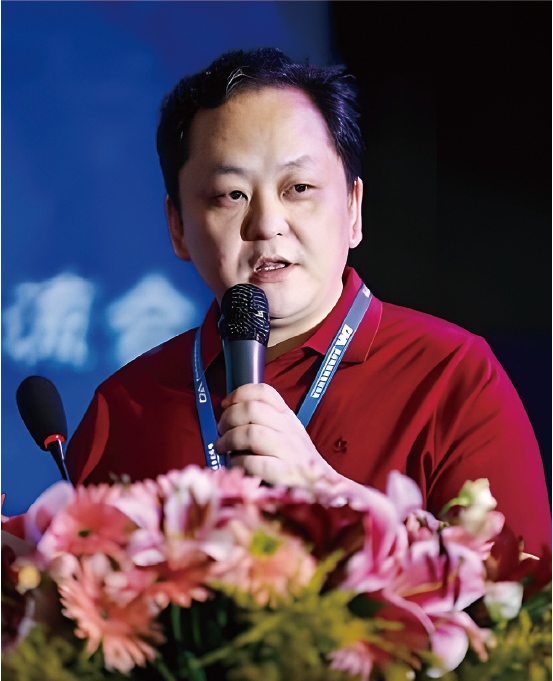
His Foundation: A Doctorate in Materials Science, and an Industrialization Expert in Microwave High-Temperature Equipment
Dr. Peng Hu has an academic background spanning three continents: he completed his bachelor's degree in the Department of Materials Science and Engineering at Beihang University, earned his master's degree in the Department of Chemical and Materials Engineering at the University of Alberta in Canada, and received his PhD from the Materials Research Institute at Penn State University in the United States.
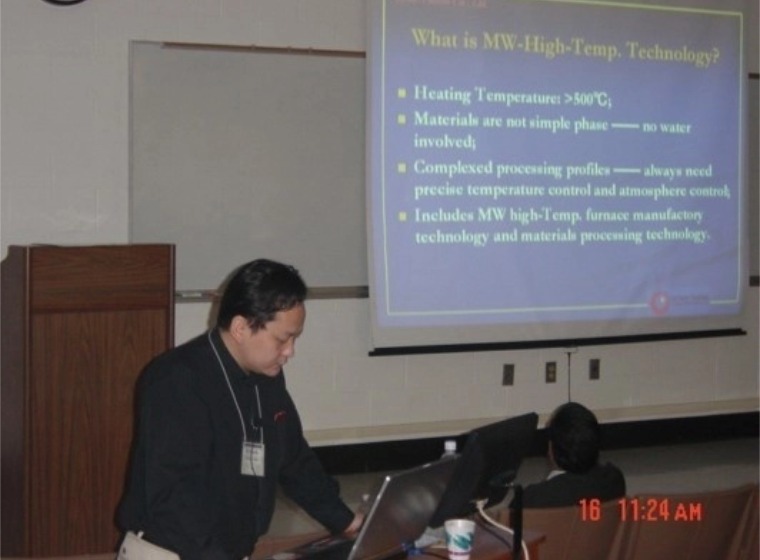
He is an internationally recognized materials scholar and a leading figure in the field of microwave high-temperature application technology, and one of only three experts worldwide who master the design and manufacturing of large-scale microwave high-temperature industrial equipment operating above 1600°C.
After returning to China, Dr. Peng continued to focus on microwave high-temperature technology. He served as chairman of the 13th National Microwave Energy Application Academic Conference and as vice chairman of the academic committee of the 1st International Microwave Energy Application Conference. He has published more than 50 papers in fields such as metallurgy, nanomaterials, and composite ceramics, and holds over 40 Chinese patents as first inventor, including 14 international invention patents.
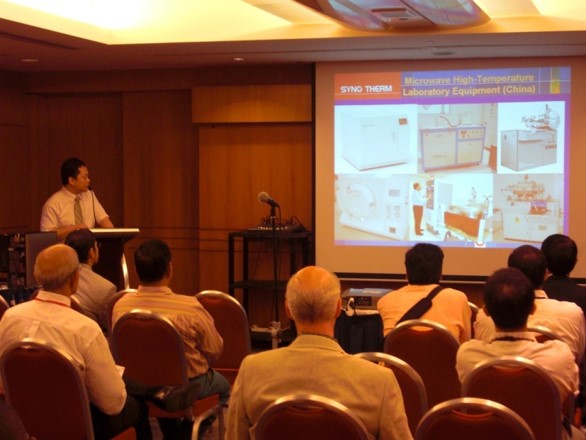
Unlike scholars who focus solely on laboratory research, before founding Yuanchuang High-Tech and Yuanxi Technology, he had already led the development of several industry-defining achievements:
- The world's first microwave high-temperature sintering production line for powder metallurgy.
- The world's first large bell-type microwave sintering furnace for special ceramics.
- The world's first roller-track microwave/hot-air hybrid drying production line.
- The world's first fully automatic controlled reduction/oxidation dual-purpose art porcelain sintering furnace.
- The world's first flash magnetizing roasting industrial demonstration line for low-grade iron ore.
These achievements built his core capability: turning material processes under extreme conditions into industrial equipment that can run continuously, stay under control, and scale up to mass production. Drawing on this hands-on industrialization experience, while continuing to work in the equipment field, he keenly recognized the potential of graphene far-infrared technology in residential heating, and extended decades of accumulated expertise in materials, equipment, and processes toward the industrialization of new graphene materials.
What Exactly Makes It So Hard to Turn Graphene into a Good Product?
The difficulty of graphene industrialization does not lie in proving the material's excellent performance, but in achieving stable material preparation and real-world application.
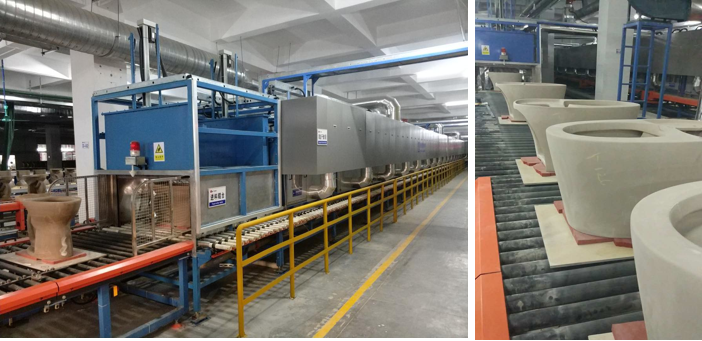
From powder to slurry, from laboratory samples to architectural ceramic panels, every stage involves the intersection of materials, equipment, and processes. Researchers who master materials may not know equipment; engineers deeply focused on equipment may not understand ceramic processes; and those familiar with ceramic processes often struggle to scale them into stable, large-scale production lines.
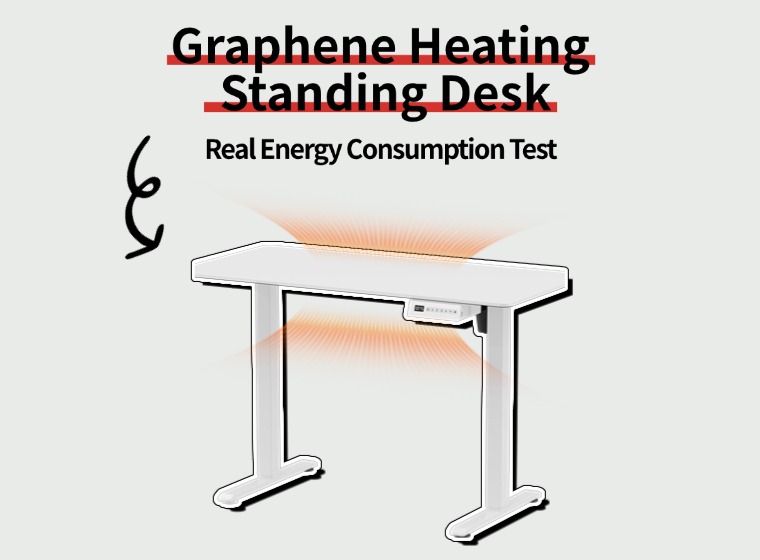
Developing graphene heating ceramic panels is even more demanding: the product must deliver uniform heating over large areas, in-situ compositing, and precise temperature control, while also being fully compatible with ceramic firing, installation, and daily use scenarios, avoiding common industry pain points such as rapid heat decay, uneven heating, and short service life.
This is exactly the direction Dr. Peng Hu has been working on for years.
When He Entered Graphene, the First Thing He Did Was Set the Rules
In the early stage of the graphene industry, there were no unified standards. Downstream customers faced products of wildly inconsistent quality and remained hesitant to adopt them on a large scale. Instead of prioritizing sales, Dr. Peng Hu and his team started by building a standards system from the ground up.
On one hand, the team led the development of two Chinese group standards, "Determination of Electrical Conductivity of Graphene Powder" and "Determination of Defect Degree of Graphene Powder by Laser Microscopy Confocal Raman Spectroscopy", establishing a unified evaluation benchmark for graphene materials in China.
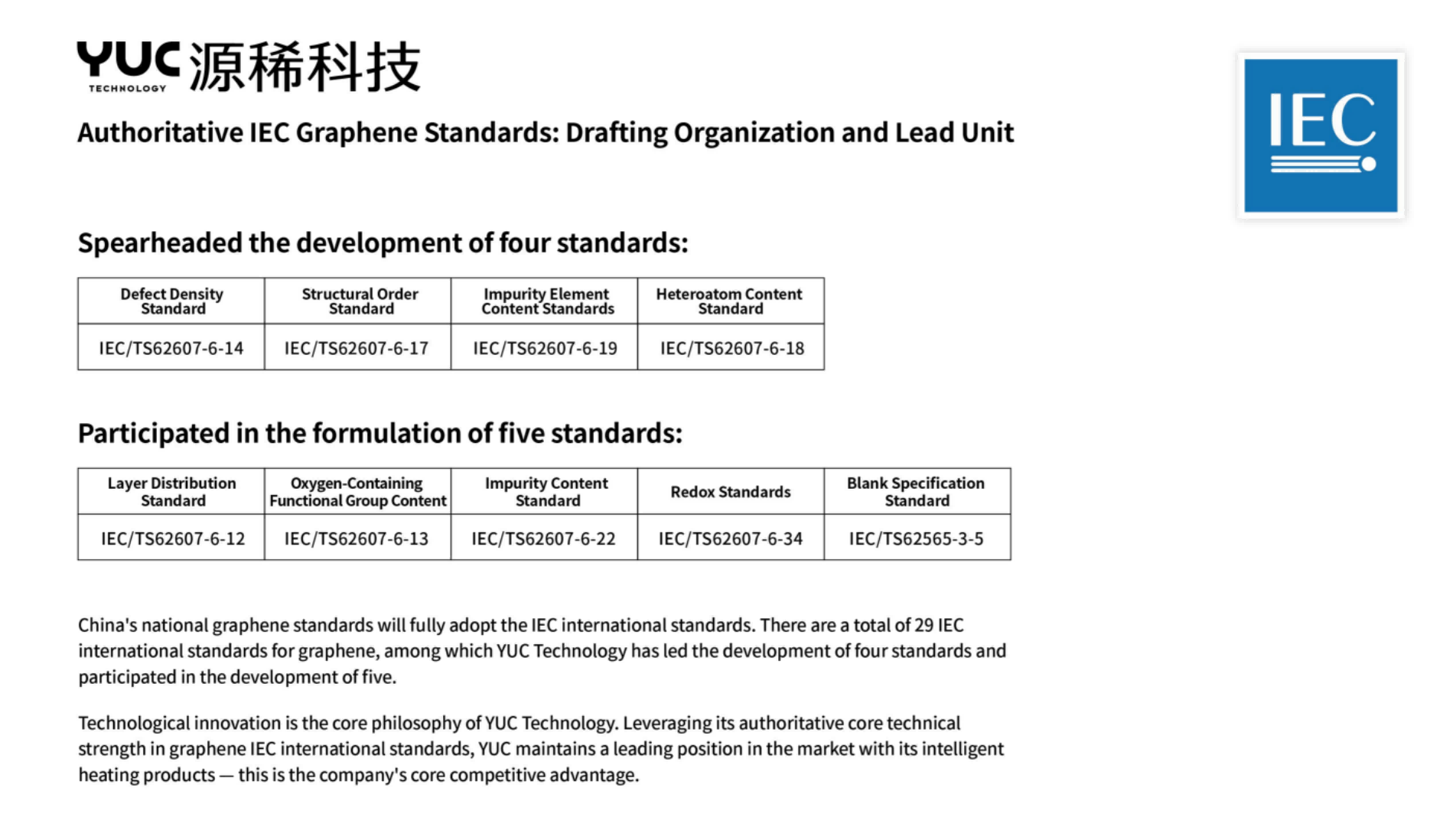
On the other hand, the team secured a core position within the global IEC international graphene standards system.
- Led the development of 4 core IEC international graphene standards
- Deeply participated in the development of 5 IEC international standards
Once a unified standards system was established, the industry gained widely accepted criteria for judging quality, allowing downstream customers to purchase with confidence and enabling graphene industrialization to shift from scattered trials to large-scale implementation.
He Completed the Full Industrialization Loop for Graphene
First, moving from the laboratory to large-scale mass production and closing the "last mile" of industrialization.
In 2019, Guangdong Yuanxi New Materials Technology Co., Ltd. was officially established, and in the same year successfully developed graphene in-situ composite coated ceramic panels. In October 2022, the large-scale production line officially went into operation, with an annual output of up to 1 million square meters. Graphene heating materials were no longer limited to laboratory samples and could now be supplied stably at an industrial level.
Second, the products obtained multiple authoritative certifications, achieving integrated innovation across three industries.
The large-area in-situ temperature-controlled heating ceramic panels developed by Dr. Peng Hu's team broke the boundaries between architectural ceramics, electrical appliances, and heating. They give traditional sintered stone home products the attributes of home appliances, integrating building materials and heating functions into one.
At the end of 2022, Yuanxi Technology's products obtained China's national 3C certification, followed by international CB, EU CE, US FCC, Japan PSE, South Korea KC, and Australia RCM certifications, securing the qualifications needed to enter global markets. With only 1% heat decay after 30,000 hours of use, the products have continued to enter overseas markets such as Europe and Japan, improving winter heating solutions for local households.
Third, the market footprint keeps expanding, extending from ceramics giants to the broader home and living sector.
Backed by solid technical barriers, Yuanxi Technology not only received a 20% equity investment from Dongpeng Holdings and reached a deep strategic partnership, but also built close cooperation with leading ceramic companies such as Golden陶醉 (Jinyitao) and Marco Polo. At the same time, it partnered with major domestic and international brands including Linshi Living, Kuka, Japan's Nitori, and Costco, fully positioning itself in the broader home and living sector.
Since the company was founded in 2019, its products have earned numerous international certifications and achieved cross-industry global expansion, successfully building a complete industrial loop covering technology R&D, production line construction, and global commercialization.
His Vision Moved Graphene from a Concept into Everyday Life
Dr. Peng Hu has long moved between academic research and industrial implementation. He serves as a member of the Chinese Microwave Energy Application Academic Committee and has carried out in-depth research cooperation with more than ten universities and research institutions, including Tsinghua University and Central South University, jointly training doctoral and master's students. He ultimately brought all of this academic accumulation down to the industrial front line: turning graphene into tangible products, bringing heating tiles into homes, and converting laboratory research results into deliverable, scalable goods.
Graphene industrialization can never be achieved by a few papers or a handful of concepts. It requires practitioners who understand the science, master engineering execution, and go deep onto the production floor to turn technology into products with stable performance. Dr. Peng Hu's career is the best proof of this.